Cable Deck Railing: The Ultimate Guide to Modern, Stylish Outdoor Safety Solutions

Key Takeaways

  • Cable deck railings offer unobstructed views while maintaining safety and code compliance for residential and commercial applications
  • Stainless steel and aluminum cable systems provide superior durability with minimal maintenance requirements compared to traditional railings
  • Professional installation ensures proper tensioning and spacing compliance with International Building Code (IBC) standards
  • Modern cable railing systems complement contemporary architecture while increasing property value by 5-10%

Modern outdoor living has transformed how we design and enjoy our outdoor areas. As homeowners increasingly prioritize unobstructed views and contemporary aesthetics, cable deck railing has emerged as the premier solution for combining safety, style, and functionality. This comprehensive guide explores everything you need to know about cable railing systems, from materials and installation to design ideas and long-term value.

Whether you’re planning a new deck project or upgrading existing railings, understanding the benefits and considerations of cable systems will help you make an informed decision that enhances both your property’s safety and visual appeal.

What is Cable Deck Railing and Why Choose It?

Cable deck railing is a modern guardrail system that replaces traditional wood, composite, or glass balusters with tensioned stainless steel cables stretched horizontally between sturdy posts. The system consists of several key components: vertical posts (typically aluminum, stainless steel, or engineered wood), horizontal stainless steel cables, tensioning hardware, and mounting brackets designed to meet stringent safety codes.

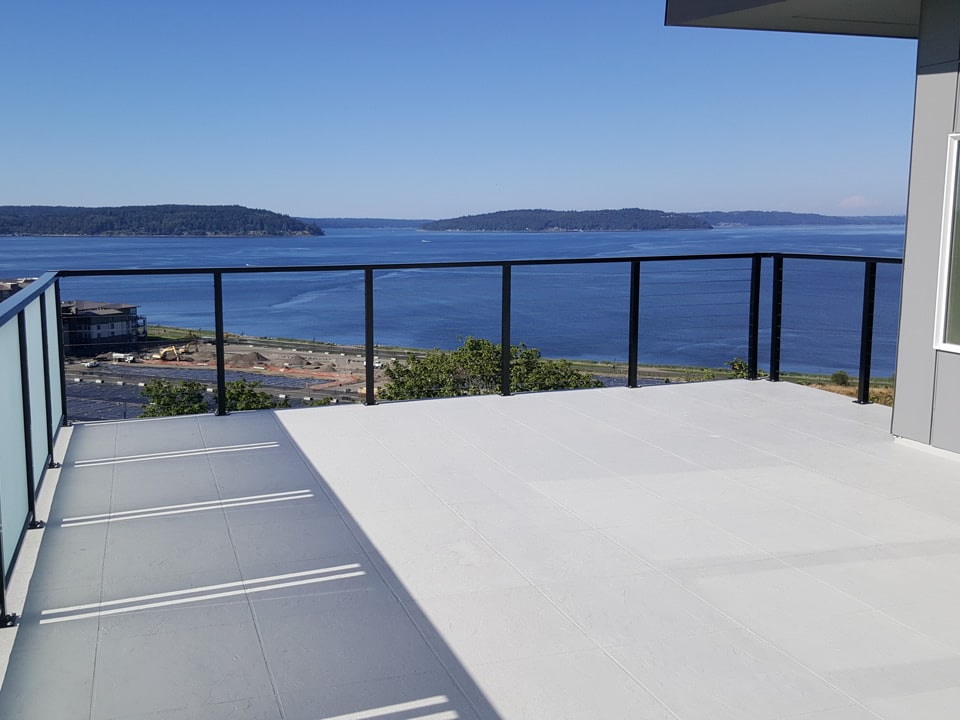
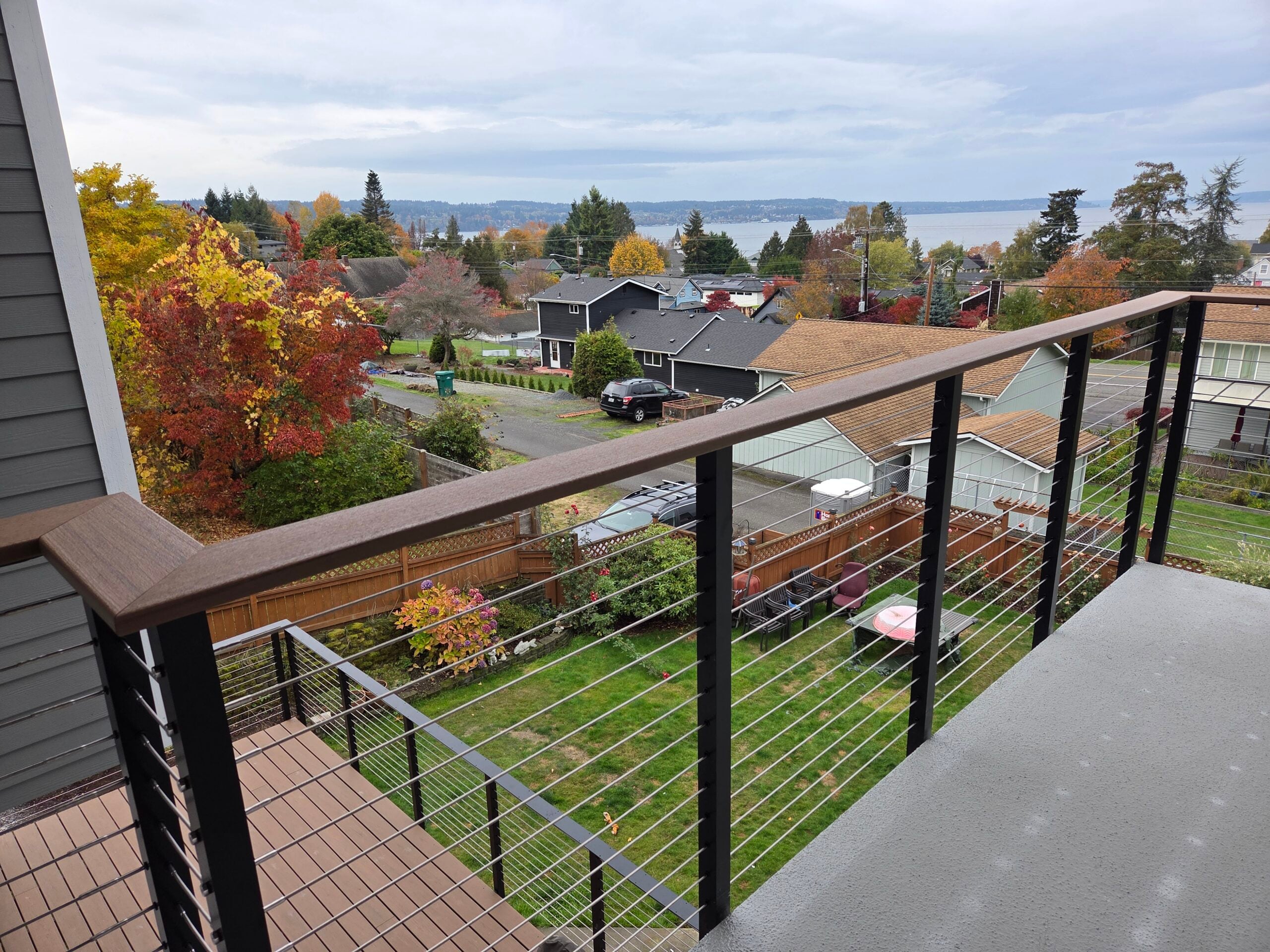
The image depicts a modern deck overlooking tranquil water, featuring a sleek cable railing system that provides unobstructed views of the surroundings. The durable materials used in the deck railing enhance both safety and style, making it an ideal outdoor area for relaxation and enjoyment.

The primary appeal of cable railings lies in their ability to provide essential safety while preserving sight lines. Traditional railing systems with vertical balusters can obstruct views significantly, while cable systems use slim 1/8” to 3/16” diameter cables that virtually disappear from eye level, especially at viewing distances beyond a few feet.

Key Advantages Over Traditional Options

Unobstructed View Preservation: Cable railings excel where view preservation is paramount. The slim cable profile maintains safety compliance while allowing nearly 95% visual transparency compared to traditional wood or composite balusters that can block 30-50% of the view.

Superior Durability: Quality cable railing systems using marine-grade stainless steel and powder-coated aluminum posts can last 25-30 years with minimal maintenance. Traditional wood railings typically require replacement or major refurbishment every 10-15 years.

Low Maintenance Requirements: Unlike wood systems that need annual staining or painting, cable railings require only periodic cleaning with soap and water. Stainless steel cables resist rust, corrosion, and UV degradation.

Modern Aesthetic Appeal: Cable railings complement contemporary architectural styles and can enhance property values by 5-10% according to industry studies. The clean, minimalist lines integrate seamlessly with modern outdoor living trends.

Safety Features and Code Compliance

Cable railing systems meet or exceed International Building Code (IBC) requirements when properly installed. The systems must withstand a 200-pound concentrated load and maintain cable spacing that prevents a 4-inch sphere from passing through under load conditions. Professional installation ensures compliance with local building codes and provides peace of mind for homeowners.

Versatile Applications

Cable railing systems work effectively for both indoor and outdoor installations, including:

  • Residential decks and balconies
  • Stairway railings and loft applications
  • Commercial terraces and rooftop spaces
  • Pool deck enclosures and waterfront properties
  • Industrial and institutional settings

The versatility of cable systems makes them suitable for virtually any environment where modern aesthetics and view preservation are priorities.

Materials and Components of Cable Deck Railing Systems

Understanding the materials and components in cable railing systems helps ensure you select the right combination for your specific environment and budget. Quality materials are essential for safety, longevity, and maintaining the system’s sleek appearance over time.

Cable Materials and Specifications

T316 Marine-Grade Stainless Steel: The gold standard for cable railing applications, T316 stainless steel offers superior corrosion resistance due to its molybdenum content. This grade performs exceptionally well in coastal environments, pool areas, and any location with high moisture exposure.

T304 Stainless Steel: A more economical option suitable for most inland residential applications. T304 provides good corrosion resistance for covered or semi-covered installations but may show signs of surface corrosion in harsh outdoor environments over time.

Cable Diameter Options:

  • 1/8” diameter: Most common for residential applications, offering excellent strength-to-visibility ratio
  • 5/32” diameter: Enhanced strength for longer spans or commercial applications
  • 3/16” diameter: Maximum strength for demanding structural requirements

Post Materials and Construction

6061-T6 Aluminum Posts: Engineered aluminum posts provide the optimal balance of strength, corrosion resistance, and cost-effectiveness. The T6 tempering process creates posts that are incredibly durable while remaining lightweight for easier installation.

Material

Pros

Cons

Best Applications

Aluminum

Corrosion-resistant, lightweight, powder coat options

Higher initial cost than wood

Coastal, contemporary designs

Stainless Steel

Maximum strength, industrial aesthetic

Premium cost, limited finish options

Commercial, extreme environments

Composite

Low maintenance, wood-like appearance

Can fade, limited structural strength

Traditional home styles

Wood

Natural beauty, widely available

Requires maintenance, weather susceptible

Budget-conscious, rustic designs

Essential Hardware Components

Tensioning Systems: Professional-grade tensioners maintain proper cable tension over time. Swage fittings and turnbuckles allow for initial installation and periodic adjustments to prevent sagging.

Mounting Brackets: Different mounting styles accommodate various installation preferences:

  • Top-mount brackets attach directly to deck surfaces
  • Fascia-mount systems attach to deck edges for maximum usable space
  • Core-mount systems provide maximum strength for commercial applications

End Fittings: Stainless steel eye bolts, clevis fittings, and termination hardware secure cables to posts while maintaining the system’s clean aesthetic.

Stainless Steel vs Aluminum Cable Railing Components

Property

Stainless Steel

Aluminum

Corrosion Resistance

Excellent (316 grade)

Excellent with coating

Initial Cost

Higher

Moderate

Maintenance

Minimal

Minimal

Strength

Superior

Very good

Weight

Heavy

Lightweight

Finish Options

Limited

Extensive powder coat colors

Lifespan

30+ years

25+ years

The choice between materials often depends on budget, environmental exposure, and aesthetic preferences. For most residential applications, aluminum posts with T316 stainless steel cables provide the best value proposition.

Installation Process and Code Requirements

Proper installation is critical for cable railing safety, longevity, and code compliance. While some homeowners attempt DIY installation, the precision required for proper tensioning and spacing often warrants professional installation to ensure optimal performance and warranty coverage.

A professional installer is shown tensioning a modern cable railing system on a deck, ensuring durability and safety while providing unobstructed views. The sleek stainless steel cables are being secured to support posts, highlighting the low maintenance and functional design of the railing system.

Step-by-Step Installation Overview

Planning and Preparation: Begin with accurate measurements and post spacing calculations. Posts typically space 6-8 feet apart for residential applications, with closer spacing required for longer cable runs to prevent excessive deflection under load.

Post Installation: Secure posts using appropriate mounting methods for your deck structure. Fascia-mounted posts require robust structural support, while top-mounted systems distribute loads across deck surfaces.

Cable Installation: Install cables starting from the bottom rail and working upward. Maintain consistent spacing throughout the run, typically 3-4 inches between cables to ensure compliance with the 4-inch sphere test. For details on service areas covered by American Railworks, visit their site.

Tensioning Process: Achieve proper cable tension using calibrated tools. Over-tensioning can damage cables or posts, while under-tensioning creates safety hazards and aesthetic issues.

International Building Code Requirements

Height Standards: Residential railings must be minimum 36 inches high, with commercial applications requiring 42 inches in most jurisdictions.

Load Requirements: Systems must withstand 50 pounds per linear foot uniform load and 200 pounds concentrated load applied horizontally at any point.

Spacing Compliance: The “4-inch sphere rule” requires that no opening allow passage of a 4-inch diameter sphere, including deflection under load conditions.

Cable Spacing and Tensioning Guidelines

Proper cable spacing ensures both safety and aesthetic appeal. The maximum spacing between cables should not exceed 3 inches at installation, accounting for potential deflection under load.

Tensioning Specifications:

  • 1/8” cables: 100-150 pounds tension
  • 5/32” cables: 150-200 pounds tension
  • 3/16” cables: 200-250 pounds tension

Required Tools: Professional installation requires cable tension gauges, swage tools, and appropriate drill bits for precise mounting holes.

Common Installation Mistakes:

  • Inadequate post spacing leading to cable deflection
  • Improper tensioning causing premature cable failure
  • Insufficient structural support for mounting hardware
  • Non-compliance with local code requirements

Professional vs DIY Installation Considerations

While cable railing kits are available for DIY installation, professional installation offers several advantages:

  • Warranty coverage and code compliance assurance
  • Proper tensioning equipment and expertise
  • Structural assessment and mounting recommendations
  • Time savings and reduced liability exposure

Most jurisdictions require permits for deck railing installations, and professional installers can navigate the permitting process efficiently while ensuring compliance with local building codes.

Design Ideas and Aesthetic Options

Cable railing systems offer tremendous design flexibility, allowing homeowners to create custom solutions that enhance their outdoor areas while reflecting personal style preferences. The clean lines and minimal visual impact of cables provide an excellent foundation for various design approaches.

Modern Minimalist Designs

Horizontal cable lines create the classic minimalist aesthetic that defines contemporary cable railing. The parallel lines emphasize the deck’s horizontal planes while maintaining visual continuity with modern architectural elements.

Clean Geometric Lines: Aluminum posts with brushed finishes complement the linear cable arrangement, creating sophisticated geometry that enhances contemporary home designs.

Monochromatic Color Schemes: Black anodized aluminum posts with stainless steel cables create striking contrast against light deck materials, while brushed aluminum posts provide subtle integration with gray and silver color palettes.

Post Style Options and Mounting Systems

Top-Mount Systems: Traditional mounting directly to deck surfaces provides maximum structural stability and works well with most deck materials including composite, wood, and concrete.

Fascia-Mount Applications: Mounting posts to deck edges maximizes usable deck space and creates a floating appearance that emphasizes the cable system’s minimal profile.

Integrated Lighting: Many post systems accommodate LED lighting integration, providing safety illumination while creating ambient outdoor lighting for evening entertaining.

Color Combinations and Finish Options

Modern powder coating technology offers extensive color options for aluminum components:

Contemporary Palettes:

  • Matte black for dramatic contrast
  • Bronze tones for warm, natural integration
  • Gray scales for neutral sophistication
  • Custom colors for specific architectural coordination

Texture Options:

  • Smooth finishes for ultra-modern aesthetics
  • Brushed textures for subtle visual interest
  • Powder coat durability ensures long-lasting color retention

Integration with Deck Materials

Cable railings complement virtually any deck material, but some combinations create particularly striking results:

Composite Decking: The modern profile of cable systems enhances the clean lines of composite materials while providing excellent color coordination options.

Natural Wood: Cable railings can soften the industrial perception while maintaining the warmth of wood deck surfaces, creating balanced traditional-modern fusion.

Concrete and Stone: The structural honesty of cable systems integrates beautifully with concrete and stone surfaces, emphasizing material authenticity.

Cable Railing for Different Architectural Styles

Contemporary and Modern Homes: Cable railings naturally complement contemporary architecture with their emphasis on clean lines, minimal visual obstruction, and honest material expression.

Industrial Style Integration: Black powder-coated posts with brushed stainless cables create authentic industrial aesthetics while providing residential comfort and safety.

Coastal and Waterfront Properties: Marine-grade materials ensure longevity in harsh coastal environments while preserving the water views that make waterfront properties valuable.

Commercial Applications: Office buildings, restaurants, and hospitality properties benefit from cable railing’s professional appearance and low maintenance requirements.

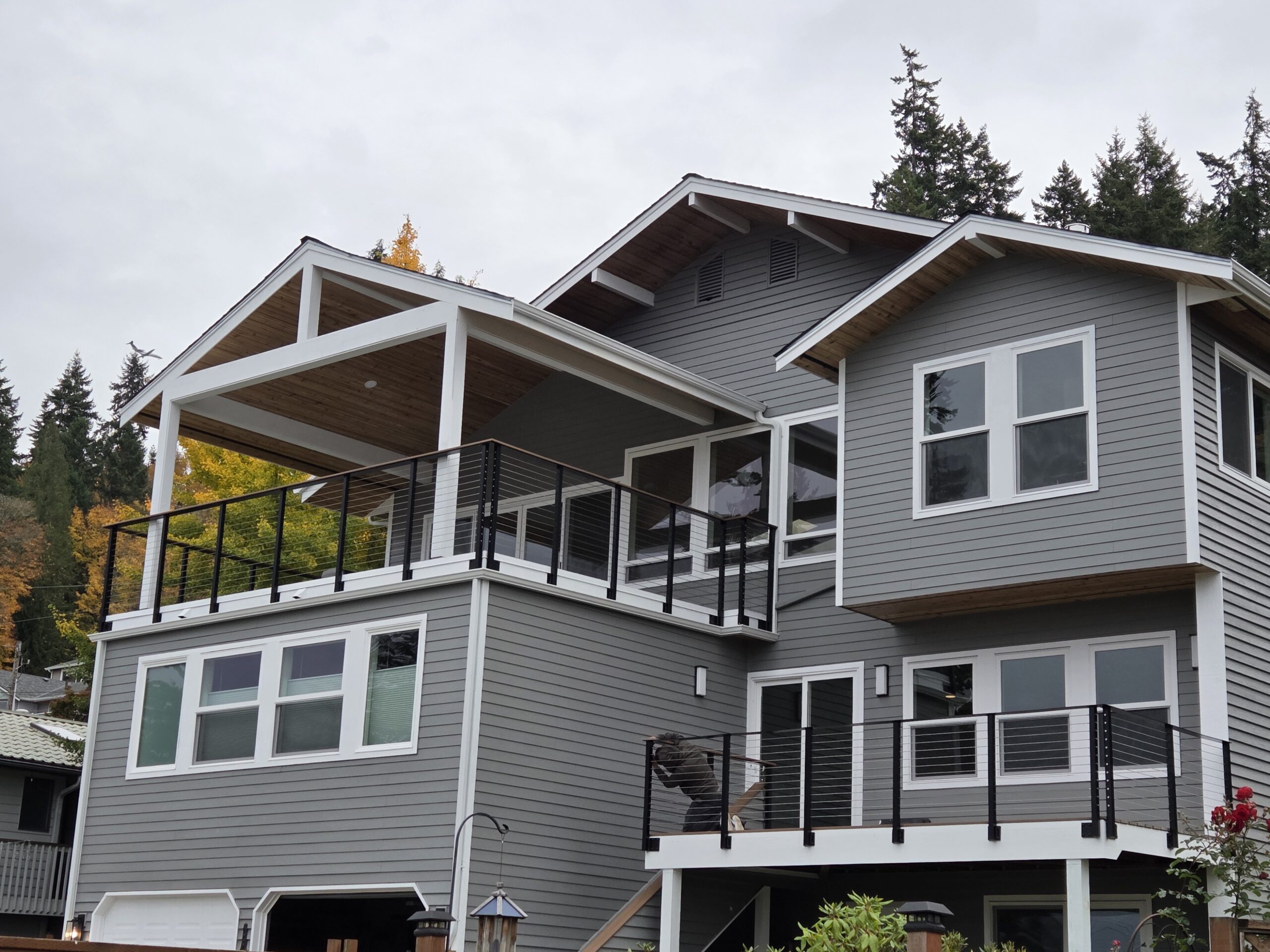
The image showcases a contemporary home exterior with an elevated deck featuring sleek black cable railings, providing unobstructed views of the surrounding environment. The durable cable railing system complements the modern design of the house while enhancing the outdoor space.

Maintenance and Longevity

One of the most compelling advantages of cable deck railing systems is their exceptional longevity combined with minimal maintenance requirements. When properly installed with quality materials, these systems can provide decades of reliable service with routine care that takes just minutes per season.

Routine Maintenance Schedule

Quarterly Inspections: Walk the entire railing system checking for loose connections, damaged cables, or any signs of wear. Look for cable tension issues, particularly after severe weather events or seasonal temperature changes.

Semi-Annual Cable Tension Checks: Cable materials naturally experience some relaxation over time. Check tension every six months using a calibrated gauge, and adjust tensioners as needed to maintain proper tautness and spacing compliance.

Annual Deep Cleaning: Clean all components with mild soap and water, paying particular attention to hardware connections where debris might accumulate. For coastal installations, rinse with fresh water monthly to remove salt deposits.

Cleaning Procedures for Different Materials

Stainless Steel Cable Maintenance: Use soap and water for routine cleaning, followed by a fresh water rinse. For stubborn stains or water spots, specialized stainless steel cleaners can restore the original luster without damaging the cable surface.

Aluminum Post Care: Powder-coated aluminum requires only soap and water cleaning. Avoid abrasive cleaners that might damage the coating. Touch up any scratches promptly to prevent moisture penetration.

Hardware Component Care: Lubricate tensioning hardware annually with marine-grade lubricants to prevent seizing and ensure smooth adjustment operation.

Signs of Wear and Component Replacement

Cable Replacement Indicators:

  • Visible fraying or broken strands
  • Excessive stretching beyond tensioner adjustment range
  • Corrosion or discoloration indicating material degradation
  • Cable spacing exceeding 4-inch code requirements under load

Hardware Replacement Signals:

  • Tensioners that won’t hold adjustment
  • Corroded or damaged mounting brackets
  • Loose post connections that can’t be properly secured

Warranty Expectations and Manufacturer Support

Quality cable railing systems typically include comprehensive warranties:

Material Warranties:

  • Stainless steel cables: 10-15 years against corrosion
  • Aluminum posts: 15-20 years against structural failure
  • Powder coating: 5-10 years against fading or chalking

Professional Installation Warranties: Certified installers often provide 2-5 year workmanship warranties covering proper tension, spacing, and mounting.

Cost Analysis and Budget Planning

Understanding the complete cost picture for cable deck railing helps homeowners make informed decisions and plan appropriate budgets for their projects. While initial costs may exceed traditional alternatives, the long-term value proposition often makes cable systems the most economical choice over the system’s lifespan.

Factors Affecting Total Project Cost

Deck Complexity: Simple rectangular decks with straight runs cost significantly less than complex designs with multiple levels, curved sections, or stair integration.

Post Spacing Requirements: Longer spans between posts reduce material costs but may require heavier-gauge cables or additional tensioning hardware.

Environmental Considerations: Coastal installations requiring marine-grade materials and specialized hardware increase costs by 15-25%.

Customization Level: Standard powder coat colors and finishes keep costs reasonable, while custom colors or special finishes add 10-20% to material costs.

Return on Investment and Property Value

Quality deck improvements consistently rank among the highest ROI home improvement projects. According to the National Association of Realtors’ 2023 Remodeling Impact Report:

Property Value Increases:

  • Quality deck additions: 65-75% cost recovery
  • Premium railing upgrades: 5-10% additional property value boost
  • Modern aesthetic improvements: Enhanced marketability and faster sales

Market Appeal Factors:

  • Unobstructed view preservation significantly increases property appeal
  • Low maintenance features attract quality buyers
  • Contemporary design elements enhance perceived home value

Financing Options and Budget Strategies

Project Financing Approaches:

  • Home equity lines of credit for larger projects
  • Personal loans for moderate installations
  • Credit card financing for smaller deck sections
  • Cash payment discounts from many contractors

Cost Management Strategies:

  • Phase installation across multiple seasons
  • Compare multiple contractor bids, especially for stainless steel cable railing
  • Consider partial DIY for simple sections
  • Negotiate package deals for multiple home exterior projects

Contractor Selection Criteria

Essential Qualifications:

  • Proper licensing and insurance coverage
  • Experience with cable railing installations
  • Knowledge of local building codes
  • Quality references from recent projects
  • Written warranties on materials and workmanship

Red Flag Indicators:

  • Significantly low bids that may indicate corner-cutting
  • Lack of proper licensing or insurance
  • Unwillingness to obtain required permits
  • No written contract or warranty terms
  • Poor communication or unprofessional presentation
The image features a close-up view of a stainless steel cable connection to an aluminum post, showcasing the sleek design typical of modern cable railing systems. This detail emphasizes the durability and low maintenance of materials used in outdoor deck railings, providing unobstructed views while ensuring safety and functionality.

Frequently Asked Questions

How often do cable railings need maintenance and what does it involve?

Cable railings require minimal maintenance compared to traditional wood or composite systems. Routine care involves quarterly visual inspections, semi-annual cable tension checks, and annual cleaning with soap and water. Most homeowners spend less than 2 hours per year maintaining their entire cable railing system. Professional tension adjustments may be needed every 2-3 years, but this typically costs under $200 for most residential installations.

Can cable railings be installed on existing deck structures without major modifications?

Most existing decks can accommodate cable railing systems with minimal modifications, provided the underlying structure meets current building codes for railing loads. The key consideration is ensuring adequate structural support for the concentrated loads at post mounting points. Fascia-mounted systems work particularly well for retrofits since they don’t require modifications to deck surfaces. A structural assessment by a qualified contractor can determine if any reinforcement is needed.

What is the maximum span between posts for cable railing systems?

For residential applications, posts should typically be spaced no more than 6-8 feet apart to prevent excessive cable deflection under load. Longer spans up to 12 feet are possible with heavier gauge cables and additional tensioning hardware, but this increases costs and complexity. Commercial installations often require closer post spacing to meet more stringent deflection requirements. The specific span depends on cable diameter, post material, and local code requirements.

Are cable railings safe for homes with small children and pets?

Cable railings meet all safety codes when properly installed, including the 4-inch sphere test that prevents small children from passing through openings. However, horizontal cables can potentially create a “ladder effect” that some children might attempt to climb. For families with very young children, vertical cable systems or hybrid designs with glass panels in lower sections may provide additional peace of mind while maintaining the cable aesthetic in upper areas.

How do cable railings perform in extreme weather conditions like high winds or snow loads?

Properly engineered cable railing systems excel in extreme weather conditions. The cables’ flexibility allows them to flex with wind loads without damage, while the materials (stainless steel and aluminum) resist corrosion from salt air, snow, and ice. In high-wind areas, the minimal profile actually reduces wind loads compared to solid railing systems. Snow and ice buildup is rarely an issue since cables don’t provide surfaces for accumulation. Many cable railing systems have been successfully installed in hurricane-prone coastal areas and harsh mountain environments.

Scroll to Top